


2 min read
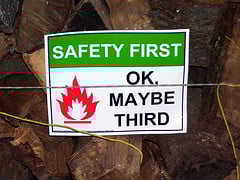
How to Communicate Workplace Safety Messages to Staff
According to Steven Bell, senior associate with law firm Freehills, in January 2012 the new Australian OHS laws will expect companies to drive safety...

Develop leaders, strengthen executive teams and gain deep insights with assessments designed to accelerate trust and performance.

Transform how your leaders think and perform with keynotes that spark connection, trust and high-performance cultures.

Explore practical tools, thought-leadership and resources to help you build trusted, high-performing teams.
Trustologie® is a leadership development consultancy founded by Marie-Claire Ross, specialising in helping executives and managers build high-trust, high-performing teams.

2 min read
According to Steven Bell, senior associate with law firm Freehills, in January 2012 the new Australian OHS laws will expect companies to drive safety...

6 min read
Back in 1987, every Alcoa plant, worldwide, had at least one accident per week. It was dangerous work. Molten metals bubbled at 1,500 degrees and...

4 min read
Back in the 1970s - 1980s, Jimmy Savile was one of the most famous television presenters on the BBC. An effervescent, eccentric man he hosted "Top of...
3 min read
Companies that are best in class when it comes to safety, all have one thing in common. And that is each employee and contractor takes ownership of...
2 min read
The best safety professionals that I've worked with like safety. They read all the right safety magazines and go to all the right safety conferences....
3 min read
Mistakes are a healthy part of learning. They're nothing to be embarrassed about, as long as you learn from them and move on. But being sloppy is a...
2 min read
In the book First, Break all the Rules by Marcus Buckingham, his research found the relationship between an employee and their manager determined how...

3 min read
Writing a safety speech can be a daunting task. But rather than staring at a computer screen for inspiration, we've put together some helpful topic...

2 min read
Last week, we looked at three different arguments to convince senior management about why they need to care about safety.