





1 min read
Is this the best safety plan ever?
Back in 1987, every Alcoa plant, worldwide, had at least one accident per week. It was dangerous work. Molten metals bubbled at 1,500 degrees and...

Develop leaders, strengthen executive teams and gain deep insights with assessments designed to accelerate trust and performance.

Transform how your leaders think and perform with keynotes that spark connection, trust and high-performance cultures.

Explore practical tools, thought-leadership and resources to help you build trusted, high-performing teams.

Trustologie® is a leadership development consultancy founded by Marie-Claire Ross, specialising in helping executives and managers build high-trust, high-performing teams.

3 min read

Writing a safety speech can be a daunting task. But rather than staring at a computer screen for inspiration, we've put together some helpful topic reminders to include in your speech to get maximum motivation and attention from your workforce. Refer to these five must-have topics to help get you started.
1. Give appreciation - In the book, Positivity, by Barbara Fredrickson, her research found that just by getting staff to think of positive things, before a meeting, enables them to be more open to new ideas. One way to do this, is at the start of your speech express gratitude to work members who have done a job well. An example is "Let's be thankful team for the for the recent improvement in your safety record and the attention you have put into improving safety here". Also, publicly thank those who have done the right behaviour. This is a great reward for good safety performance and is more effective than financial incentives. Just by starting your speech on a positive note, you will find people more open to your speech and staff moods will lift.
2. Explain why safety is important- People need to feel that they are part of something bigger than themselves. Don't just say safety is important. Explain why and follow it up with action. Staff want to feel safe at work and that their safety is important to the company, so make sure safety initiatives are always followed through by senior management.
Make sure you discuss:
the current safety performance and why it needs to be improved (explanation)
the benefits to staff, company and community (expectation)
any negatives (explanation)
how the new safety initiative will be measured and what is expected from each staff member (expectation).
2. Refer to your company safety message/core values - The more you remind people of your company safety message, the better. Aim to tie it in to you speech, at least twice. Also mention your core values to gently nudge people in the right direction of the behaviour required.
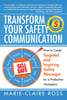
3. Tell a safety story - Telling stories helps people to remember information and also provides an emotional connection to information. Become a story detective in your company. Talk to staff about their experiences and re-tell stories that provide examples of the behaviour you want to encourage Even better - get someone who was injured to tell the story for you. Research has found that staff are more likely to believe an end user's story about their experience, resulting in a greater likelihood of behaviour change. A great resource to help you write better safety stories and messages can be found through the book, Transform your Safety Communication. Get a free chapter here.
4. Focus on what's working - It's easy to blame people and get negative about a situation. But this is the quickest way to get people to turn off and do more of the behaviour you don't want. Rather than focusing on problems or negatives, get people to focus on what's working and what they need to do more of. According to Chip and Dan Heath from the book Switch, in tough times we see problems everywhere (and let's face it, there are some people who see negatives even in good times). To make progress, discovering what is working can help solve your problem. By finding what is working and cloning it, you can start to direct people on what to do and how to get there.
5. Encourage team talk - Again, in the book, Switch, by Chip and Dan Heath, they stated that identities are central to the way people make decisions, any change effort that violates someone's identity is doomed to failure. It's important to encourage group behaviour when people need to consider the group rather than themselves. Staff will frame questions to themselves based on a whole range of identities such as gender, race, age and their job title. The trick in using group identity when wanting staff to change behaviour or embrace a new goal is to word it so they make a decision based on what's best for the group. Rally the troops by using inclusive language. "Come on, guys, we're production people we're good at doing things safely!' or "Come on every-one, we're XYZers the best company in our industry, as a leader in our field we can do better than this!"
By incorporating these topics into your safety speech, you'll ensure that your staff are open to your message and keen to make improvements.


1 min read
Back in 1987, every Alcoa plant, worldwide, had at least one accident per week. It was dangerous work. Molten metals bubbled at 1,500 degrees and...

1 min read
Our language is incredibly powerful. How we talk about ourselves, and others, says a lot about about us.

1 min read
If you're in charge of writing the next safety message or safety slogan for your company's safety initiatives, you know that you've got a challenge...