





7 HELPFUL STEPS TO AVOID BURNOUT IN YOUR TEAM
Ever wondered how to avoid burnout in your team? Read seven tips to improve the wellbeing and productivity of your direct reports.

Develop leaders, strengthen executive teams and gain deep insights with assessments designed to accelerate trust and performance.

Transform how your leaders think and perform with keynotes that spark connection, trust and high-performance cultures.

Explore practical tools, thought-leadership and resources to help you build trusted, high-performing teams.

Trustologie® is a leadership development consultancy founded by Marie-Claire Ross, specialising in helping executives and managers build high-trust, high-performing teams.

8 min read
As teams return from their summer (or winter) break, you may notice subtle shifts in your team’s energy. Even if the end of year was positive, a new beginning often brings changes to team dynamics. Your team might feel a little flat, disconnected, stuck or simply not quite themselves.
So much can happen in a few short months that affects how safe, connected, and motivated people feel about the future. Roles shift. A valued team member leaves. A newcomer joins. Strategy evolves. Someone misses out on a promotion. A decision feels unfair. Each of these experiences can quietly erode trust and alter the “vibe” of the team.
Strong leaders don’t assume team dynamics will naturally reset themselves. They pause to sense where people are emotionally, how well they’re truly working together, and whether the team still feels aligned around a compelling future. Every team benefits from an honest check-in and a conscious realignment.
Based on my Achievement Zone model mentioned in my book, Trusted to Thrive, (get your free chapter here), here’s a practical guide to resetting your team’s dynamics and restoring energy, trust and momentum.
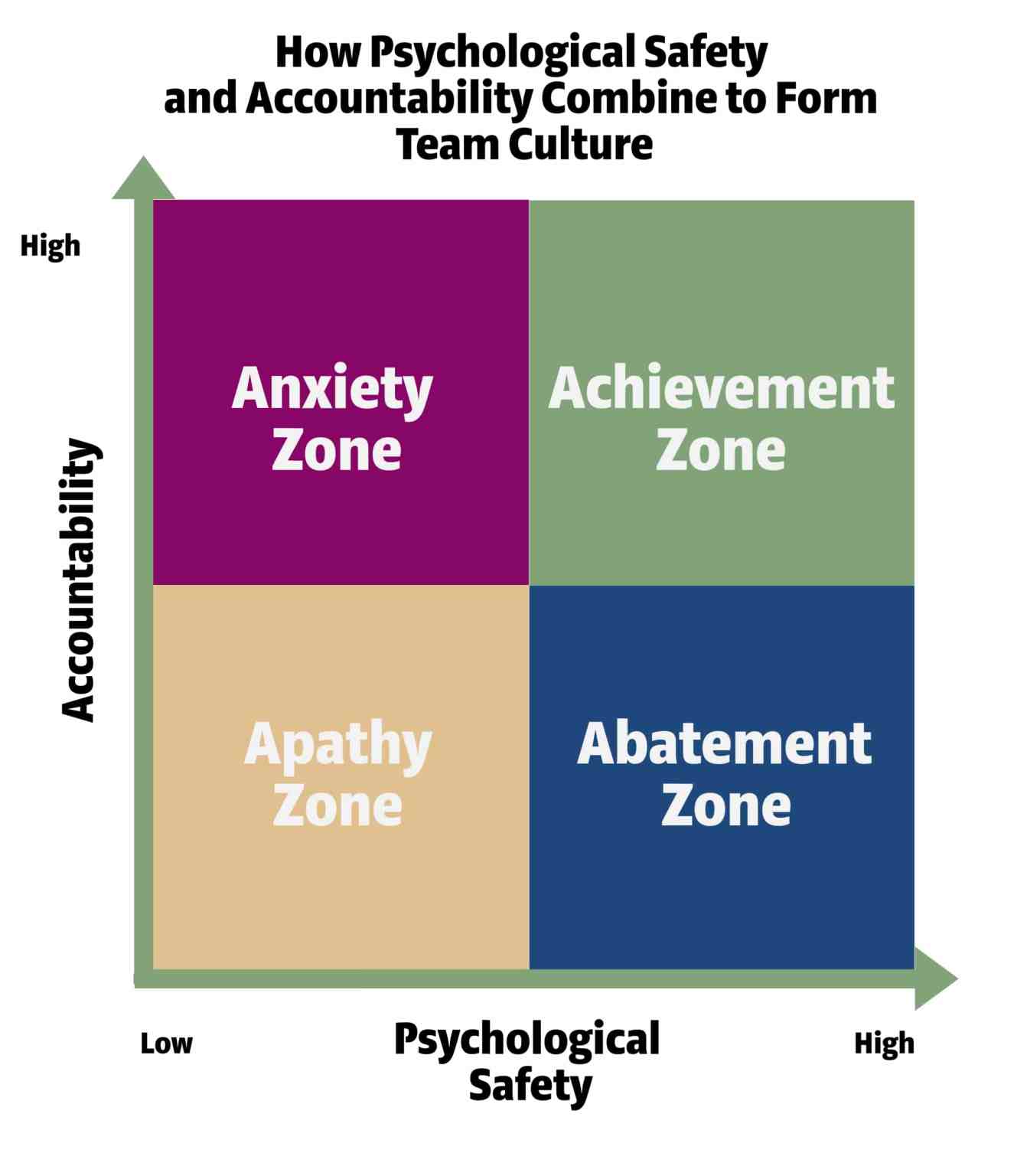
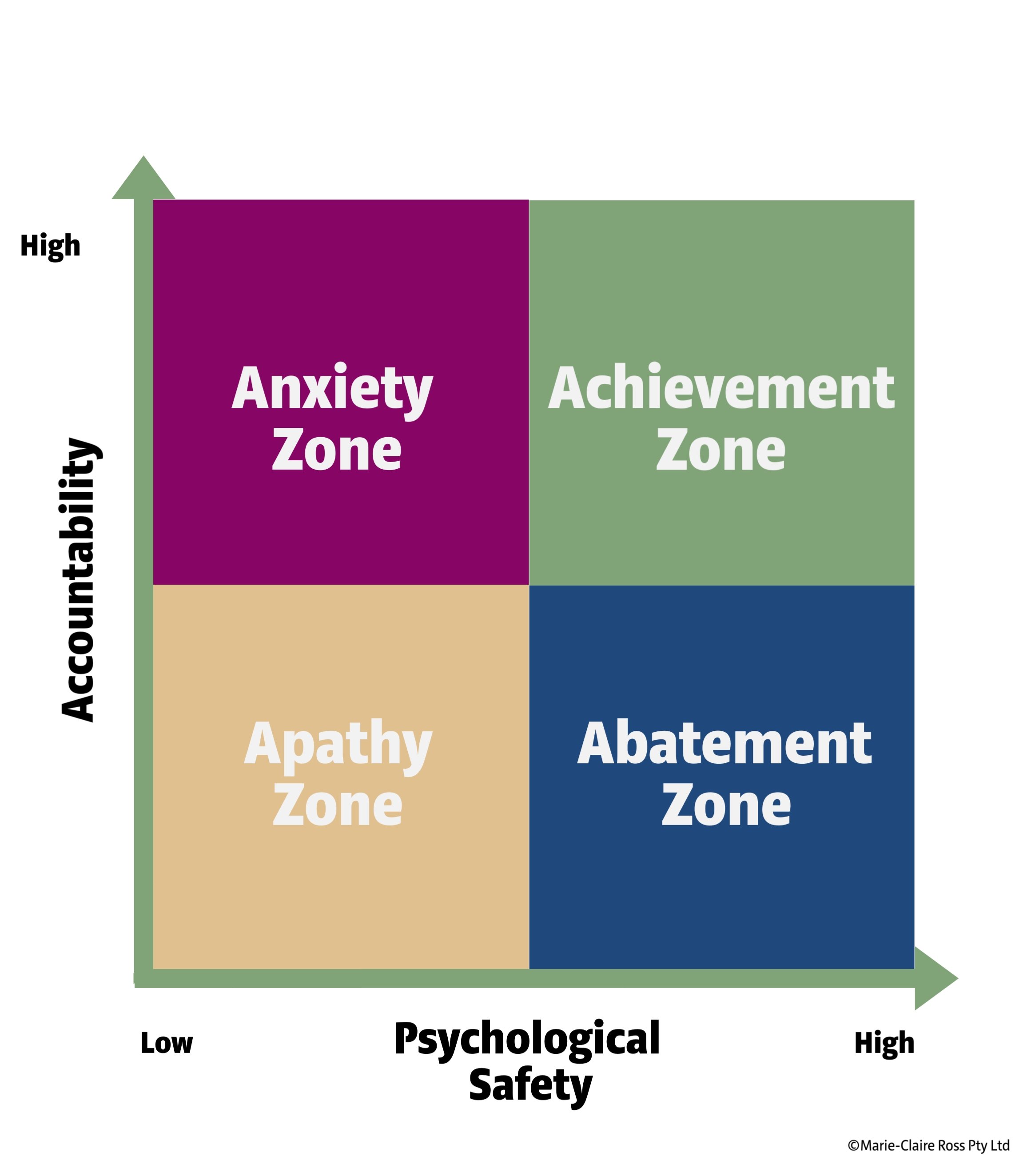
In my research with teams, I have found that the level of psychological safety and accountability in your team determines your team's culture and current level of performance.
Understanding how the intersection between safety and accountability impacts your team performance is a game changer for leaders. Knowing which zone each person is in gives you critical insight into which strategies to use in your one-on-ones to help them lift into the next performance zone.
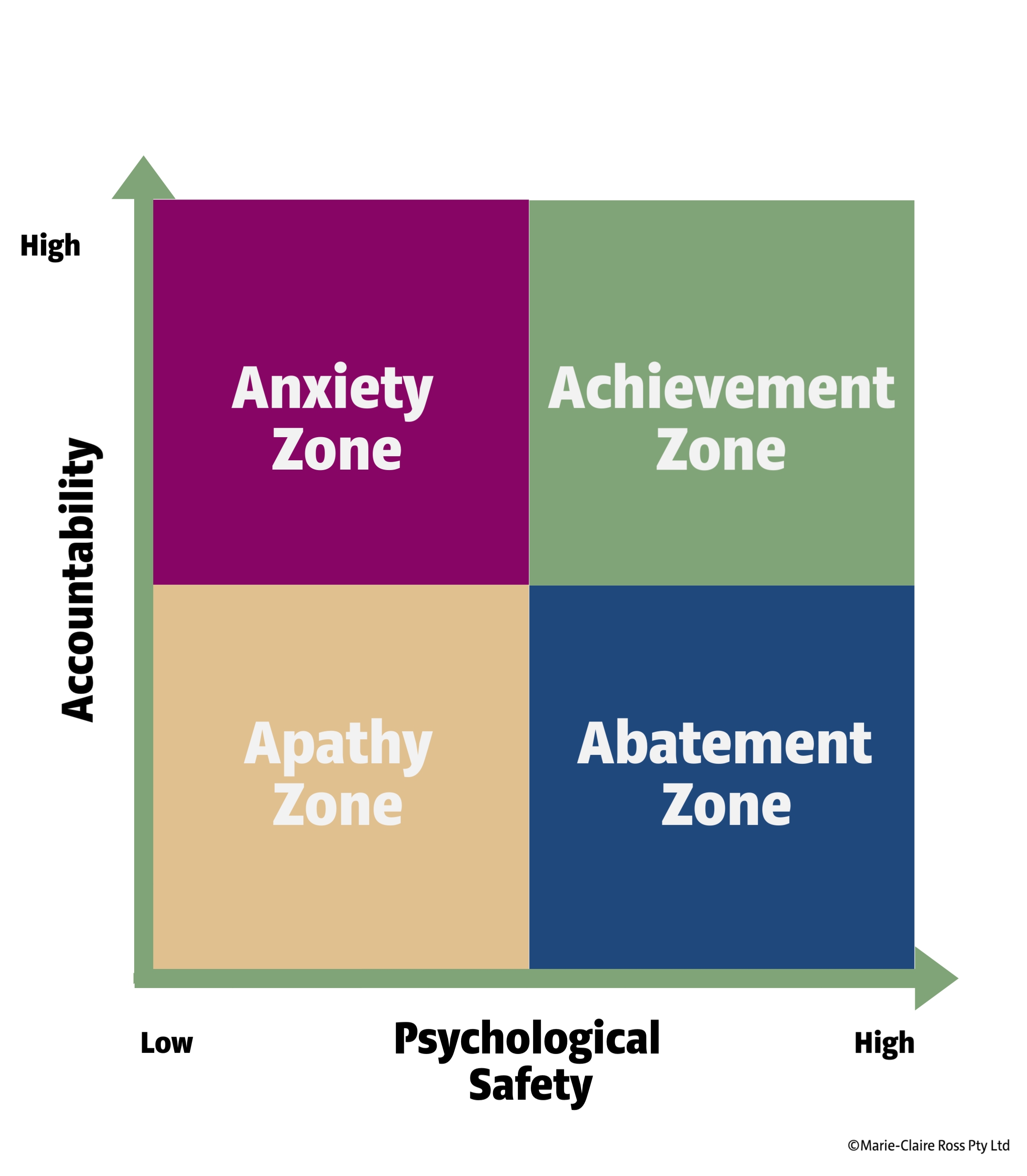
Interestingly, these four zones also reflect how your team is currently performing and the impact that has on people day to day. You may also notice that each zone maps to where individual team members are currently sitting (and even yourself). If you want to read about how to improve individual team member's performance, read this article "How to Move into the Achievement Zone."
Before jumping into solutions, it’s important to get a clear and honest picture of where your team is really operating right now. You can do this in two ways.
First, reflect as a leader. Read through the four zones below and notice which descriptions create the strongest sense of recognition based on what you are observing day to day -energy, behaviours, communication and results.
Second, involve your team. Share the Achievement Zone model and the zone descriptions below, and ask everyone to reflect individually before discussing together:
Which zone do you believe our team is mostly operating in right now?
What behaviours or experiences lead you to that view?
Where do you notice differences across the team?
The aim is not to label the team or defend positions, but to surface an accurate, shared picture of current reality. While many teams instinctively place themselves in the Achievement Zone, sustainable high performance depends on the courage to look clearly at what is working, what is drifting, and what needs to shift.
Here are some questions to consider when identifying which zone is most applicable for your team as a whole:
Apathy Zone
Anxiety Zone
Achievement Zone
Having an open discussion with your team about where you think you are surfaces important insights and information on what strategies you can to do improve.
Over the years, I find a lot of teams want to automatically label themselves in the Achievement Zone. But sustainable high performance is difficult without honest reflection of what's working and what's not with regular tweaks to optimise performance.
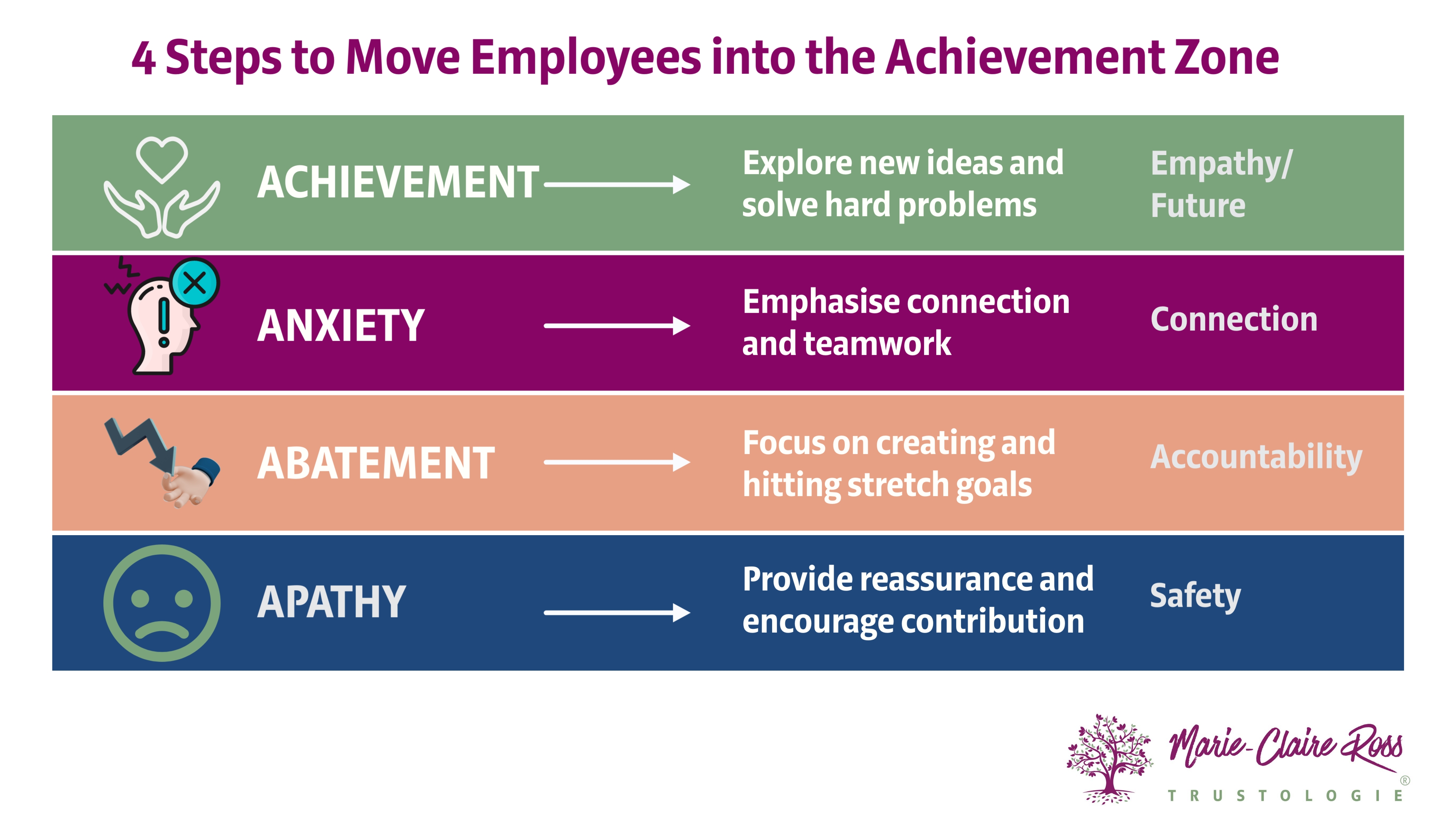
Let's take a look at the strategies to move out of each team zone.
If you inherit a team that has had poor leadership or gone through a lot of redundancies, you will find all of their energy is spent on self-preservation - either because they are afraid of being caught out doing the wrong thing or they are exhausted.
The key word to move people out of apathy is safety.
This requires providing reassurance that they are valued and encouraging contribution.
Most of the work to improve this team is done at an individual level through trust-building one-to-one's. This is where you gradually build a sense of psychological safety at work by giving people space to emotionally vent, talk about what they enjoy, receive genuine praise, see how their work impacts others, and begin to explore personal learning goals.
Once you have started that process, you can then work with the team. To shift people's perceptions of their job:
In the Abatement zone, you may notice that your team hasn’t really been held to strong standards for some time, or they’ve become a bit overconfident in how they view their own performance.
Moving people into a zone of high performance can be a shock to their system. It's a bit like they have been on a long summer holiday and now they are back at school and their head is spinning with all of the information they have to learn.
The key word to move out of Abatement is accountability. The focus is on creating and hitting stretch goals.
Again, this involves weekly one-on-one's so you can work closely with them to not only lift performance but show you are supporting them in their goals. Sit down with them and let them know you see their potential and want to help them. Work with them on both their personal and work learning goals.
As a team, you want to focus on new goals and achieving them:
Ask your team:
How is our value to the organisation changing?
What are customers or stakeholders needing now that they didn’t need a year ago?
What would make our team indispensable in the next 12 months?
How do we want to hold each other to account when standards slip?
What agreements do we need about feedback, follow-through and ownership?
How will we know, week by week, if we are winning or drifting?
In the Anxiety Zone, the team works hard and stresses over getting things done. Often, team members feel disconnected and all alone in doing the work. This becomes a vicious cycle where they often feel they can only rely on themselves.
The key focus word here is connection. The strategy to do this is to emphasise connection and teamwork.
In your one-on-one's it's important to help them learn to ask for help (and accept it) and work with others. Help them with their work prioritisation to reduce overwhelm. Bring in other resources and connections to help. Reduce unnecessary roadblocks or distractions.
With your team, work on:
If team behaviours clearly need to change, then consider working with your team to create a team charter.
Keeping ourselves in the Achievement Zone is not easy. We need to be intentional and always working on it.
To help our direct reports play in this zone for longer, the key themes here are empathy and future. This involves taking the time for them to understand each of your direct reports, individual goals and aspirations, so that you can explore new ideas and solve hard problems.
This occurs when a team leader creates stretch goals and challenges direct reports to improve and strongly believes they can achieve. In this environment, people thrive on the autonomy to work how they want and contribute to high level decisions. And it all comes down to a leader continually tweaking how to create a high performance culture in the team. It doesn't happen by accident.
In this zone, you can treat employees like athletes pushing them to continually improve – breaking their best records, not by a few degrees but through dramatic improvement.
To keep tweaking your team performance:
When a team commits to both, debate becomes constructive rather than political, feedback is given to help rather than to protect egos, and learning accelerates. The shared standard becomes: we challenge each other because we care about the work and about each other, not because we need to be right. Ask your team:
Where might our current thinking be wrong or incomplete?
What assumptions are we making that need testing?
When was the last time we changed our mind based on new evidence?
What emerging trends could disrupt our work or create new opportunities?
What excites you most about where our industry is heading?
How do we want to shape the future rather than react to it?
In a time of constant change, shifting expectations and ongoing uncertainty, team dynamics rarely stay stable for long. Leaders can no longer assume their team’s energy, trust and performance will naturally reset after a break; actively realigning the “team vibe” has become a core leadership skill.
The Achievement Zone model shows how psychological safety and accountability shape whether teams drift into apathy, complacency, overdrive or sustainable high performance, and how they can be guided back into the zone where people feel both supported and stretched.
For leaders, this provides a clear framework to diagnose what’s really going on beneath the surface and to intervene with confidence rather than guesswork. For teams, it creates the conditions for greater team trust, clarity, collaboration and motivation, enabling them to do their best work, grow together, and stay focused on an inspiring future rather than merely coping with the present.
Ever wondered how to avoid burnout in your team? Read seven tips to improve the wellbeing and productivity of your direct reports.

Your team keeps bringing decisions back to you. Here's how to hand over real decision-making rights, not just more responsibility, without losing...
Discover the execution gap that hinders smart teams from delivering results. Learn how to redesign execution for success and empower your team.