



Why Your Leadership Brand Controls Your Career Success (And How to Fix It)
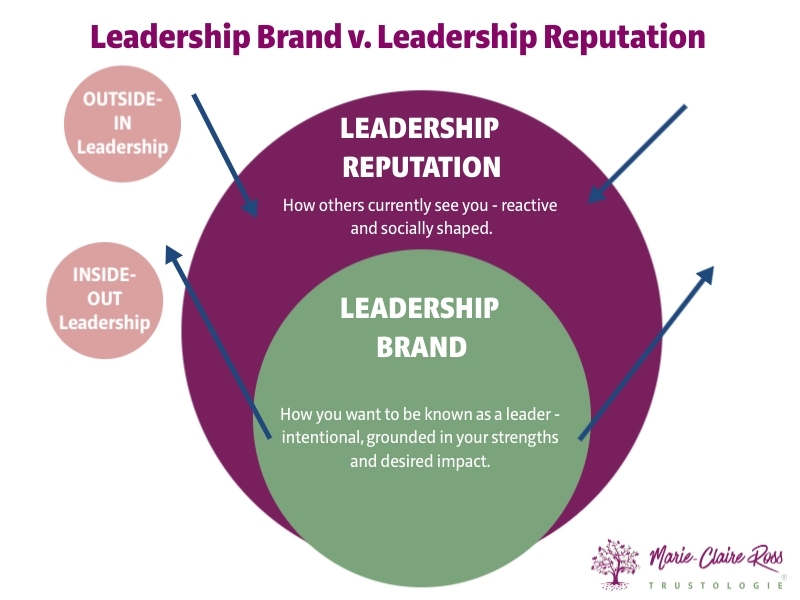
Discover how defining your leadership brand can drive career success and organisational impact. Learn to lead with intention, authenticity, and...

Develop leaders, strengthen executive teams and gain deep insights with assessments designed to accelerate trust and performance.

Transform how your leaders think and perform with keynotes that spark connection, trust and high-performance cultures.

Explore practical tools, thought-leadership and resources to help you build trusted, high-performing teams.
Trustologie® is a leadership development consultancy founded by Marie-Claire Ross, specialising in helping executives and managers build high-trust, high-performing teams.

3 min read

As an executive coach, I’m often brought in to support executives and senior managers who are technically capable, experienced, and hardworking - yet somehow keep getting passed over for promotion.
What’s interesting is that it’s rarely about a lack of skill, intelligence, or effort.
More often, it’s about how they show up.
Certain leadership habits - usually well-intentioned - quietly erode confidence in their readiness for bigger roles. Left unchecked, they can stall a career even when performance looks solid on paper.
Here are four of the most common habits I see that unknowingly stop leaders from moving up.
Some leaders believe that constantly pointing out flaws, risks, or problems proves they’re sharp, realistic, and senior.
In reality, chronic negativity has a very different impact.
These leaders:
They may see themselves as discerning. Others experience them as heavy, pessimistic, or difficult to work with.
Senior leaders are promoted not just for what they see, but for the emotional climate they create. People want to follow leaders who bring clarity, momentum, and belief - especially in uncertain times.
If people feel deflated when you walk into a room, that’s a promotion blocker.
This one catches out a lot of well-meaning leaders.
They’re fiercely loyal. They shield their team from pressure. They take on extra work so others don’t get overwhelmed. They buffer their people from tough conversations with peers or senior leaders.
On the surface, it looks caring.
Underneath, it often undermines accountability and collaboration.
When leaders spend too much time rescuing, smoothing over, and protecting:
There’s another hidden cost: over-protected teams become less likely to work with other teams.
When a leader acts as a constant gatekeeper, silos form. Other leaders stop engaging directly. Collaboration narrows. “Us versus them” dynamics creep in.
At senior levels, leaders are expected to build capable, connected teams - not create dependency or isolation.
Protecting people from growth is not the same as supporting them.
Many leaders say they value accountability - until things go wrong.
When results slip or pressure rises, this habit shows up as:
A critical part of self-awareness at senior levels is alignment between words and actions.
Leaders lose trust quickly when they:
People watch what you do, especially under pressure. When behaviour doesn’t match intent, credibility erodes.
Leaders who get promoted are trusted because they can say:
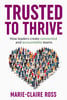
That consistency is what builds confidence that you can be trusted with more. As I say in my book, Trusted to Thrive:
"You can't talk your way into trust; you have to behave your way into it."
Past success can quietly become a liability.
Some leaders rely heavily on the leadership style, behaviours, or thinking that worked earlier in their career without noticing that the context has changed.
This is where many leaders slip into what I call the Abatement Zone:
a place where things feel safe, familiar, and controlled - but energy, growth, and innovation quietly flatten.
In this zone, leaders:
Senior roles demand movement out of the Abatement Zone and into growth, challenge, and experimentation.
Leaders who get promoted demonstrate that they can:
Comfort might feel safe, but it signals you’re better suited to your current role than the next one.
Leadership promotion is rarely just about results.
It’s about trust.
Trust that you can:
These are the leadership behaviours decision-makers look for when assessing who is ready for more responsibility, broader influence, and greater complexity. And how executives stay in their positon.
The challenge is that the habits that block promotion are rarely obvious. They often feel justified, well-intentioned, or even responsible in the moment.
Which makes them dangerous.
Because the leadership habits we can’t see in ourselves are the ones most likely to cap our career growth.
That’s exactly where executive coaching and leadership development make the biggest difference.
In my executive coaching, I work with leaders to identify the unseen habits shaping how they show up under pressure and to replace them with behaviours that build trust, credibility, and readiness for senior roles.
My leadership development program goes further, supporting leaders over time to step out of the Abatement Zone, strengthen self-awareness, and consistently lead in ways that drive performance and promotion.
If you’re serious about moving into your next level of leadership, the work isn’t about doing more.
It’s about becoming the kind of leader others trust with more.
Discover how defining your leadership brand can drive career success and organisational impact. Learn to lead with intention, authenticity, and...

Discover the seven best practices for evaluating a high-impact leadership program to develop effective leaders and drive meaningful change.
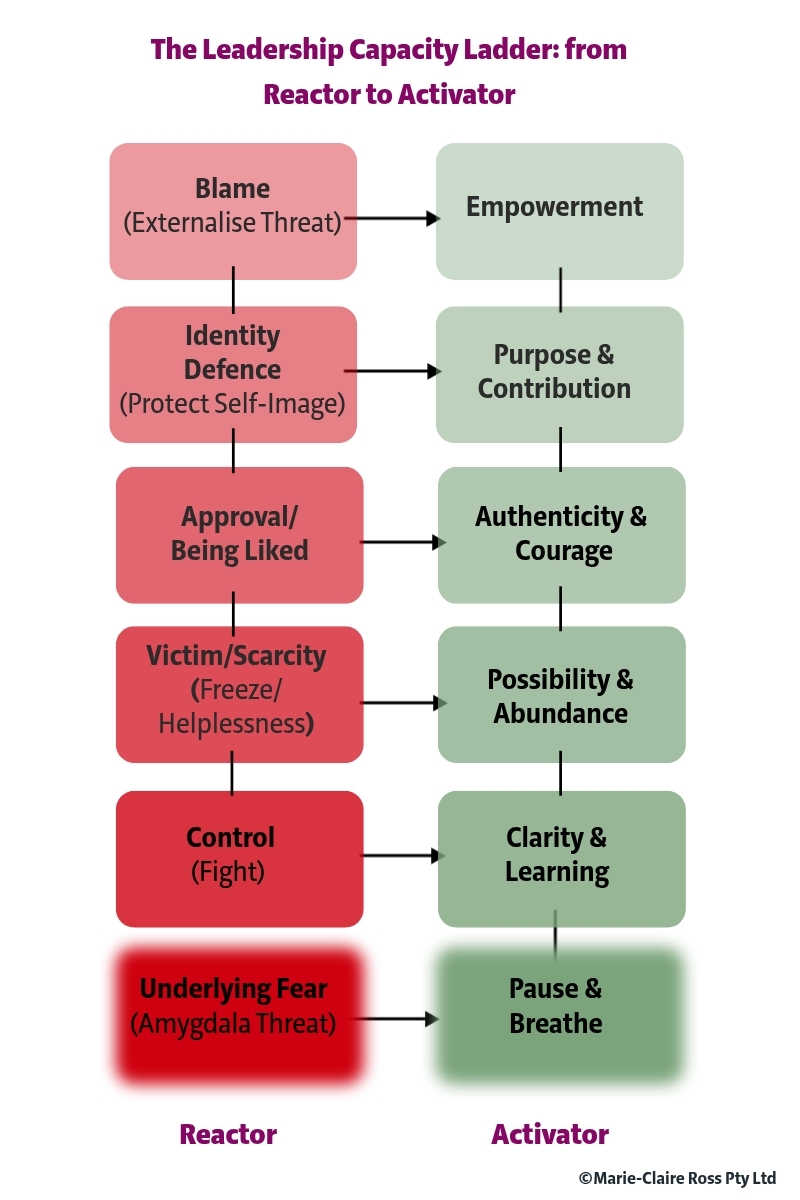
Discover how great leaders transform stress into opportunity during a workplace crisis, fostering resilience and growth.