



1 min read
5 Silent Decelerators that work against you being a Trusted Leader
Our brains are naturally wired to seek out certainty and a sense of safety.

Develop leaders, strengthen executive teams and gain deep insights with assessments designed to accelerate trust and performance.

Transform how your leaders think and perform with keynotes that spark connection, trust and high-performance cultures.

Explore practical tools, thought-leadership and resources to help you build trusted, high-performing teams.
Trustologie® is a leadership development consultancy founded by Marie-Claire Ross, specialising in helping executives and managers build high-trust, high-performing teams.

9 min read

You can tell within ten minutes of walking into an executive team meeting whether the team trusts each other. Not from the agenda or the slides. From the feel of the room.
When trust is missing, the same issues return every month, the real conversation happens in the corridor afterwards, and the CEO ends up carrying decisions the team should be making.
When trust is there, the room feels different, and the results follow. Bain's study of 1,250 executive teams found a clear correlation between company performance and how well the executive team functioned together, yet only 20% of the teams studied were high performing.
This article gives you seven observable trust signals of a high-performing executive team, drawn from my Achievement Zone Model and the published research on executive teams, so you can see where your team sits today and what to do next.
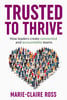
The Achievement Zone Model, from my book Trusted to Thrive, is how I help teams map this in my own leadership consulting practice. It plots team performance across two conditions: psychological safety and accountability.
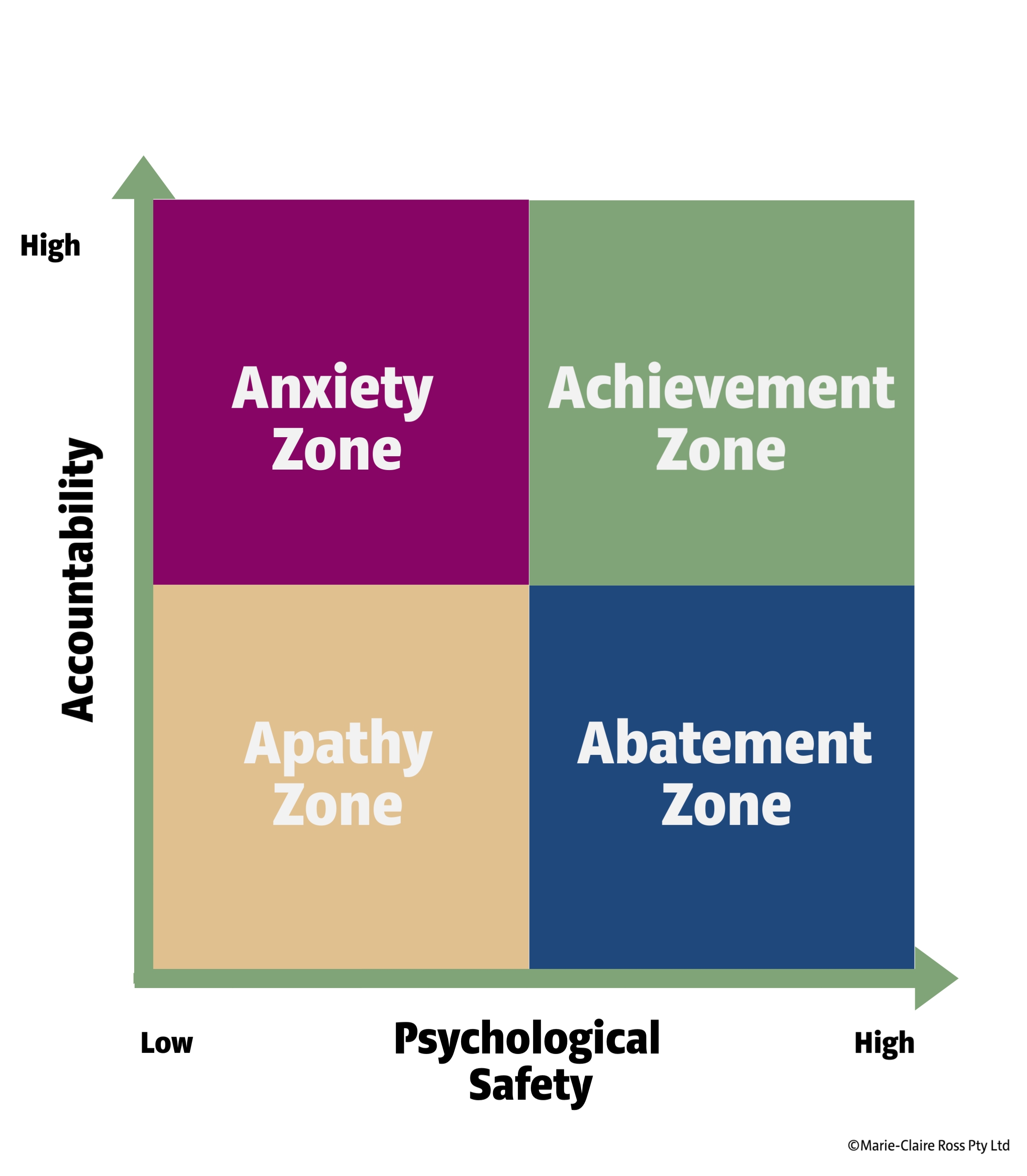
An executive team with high accountability and low safety is in what I call the Anxiety Zone, working hard but feeling disconnected and alone in it.
A team with high safety and low accountability sits in Abatement, comfortable and coasting, nobody stretching.
A team with both low is in Apathy, running on self-preservation and blame.
Only when safety and accountability are both high does a team reach the Achievement Zone, where people learn and work together, focus on continuous improvement, and explore exciting new possibilities. Trust is what moves an executive team into that zone, and what keeps it there.
The published research on executive teams backs this up, and it is more sobering than most CEOs expect.
Ron Carucci, Mindy Millward and Eric Hansen, writing in Harvard Business Review's What the Best Leadership Teams Do Right, cite Bain's study of 1,250 executive teams, which found a clear correlation between company performance (revenue, profitability, shareholder return) and how well the executive team functioned, yet only 20% of the teams studied were high performing. McKinsey's research across more than 500 executives on more than 20 top teams found something similar in Teamwork at the Top: 65% of respondents said trust was a real issue for their team, and only 20% believed their own team was genuinely high-performing.
Both point to the same thing I see in my leadership consultancy: healthy, trusting relationships among the executive team create the organisational safety needed to welcome dissenting voices and differing viewpoints, which leads to deeper insights and shared ownership of decisions. The McKinsey researchers go further. Teams rarely build trust through "sharing" exercises about keeping or breaching it. They build it by working together on real strategic problems and reflecting honestly on how they did it.
That belief is tested in small moments, dozens of times in every meeting. Does someone ask the question that might sound naive? Does someone admit they made a mistake (and apologise)? Does someone disagree with the CEO? Those moments are what you sense when you walk into the room.
These teams feel different. There is no single behaviour that explains it, but the same qualities turn up again and again:
The seven signals below are the behaviours underneath that feeling.
What you will see. Wins and misses are both reviewed. Someone says, "Here is what I learned from that." Leaders share what they have read, tried or got wrong, and the rest of the team picks it up and uses it. Mistakes are treated as information, not evidence.
Where it slips. In the Anxiety Zone, misses get hidden because being seen to fail feels dangerous. In the Abatement Zone, nobody is stretching, so deep insights are rarely shared.
What to try. Open your next executive team meeting by asking each person to name one thing they learned in the past fortnight, including one thing that did not go to plan. Go first.
What you will see. "I see it differently" is said to the CEO, and the CEO leans in. Disagreement comes with reasons. Questions like "What would need to be true for this to work?" replace verdicts. The person being challenged does not go quiet afterwards.
Agreement is not trust. A team that never disagrees is not harmonious. That is Abatement dressed up as trust. Erika Herb, Keith Leslie and Colin Price make the same point in their McKinsey research on top teams: the strongest executive teams learn to be "both challenging and supportive at the same time."
Where it slips. In the Abatement Zone, everyone is polite and nothing is tested. In the Anxiety Zone, challenge feels like an attack, so people either avoid it or return fire.
What to try. Agree on a simple rule: challenge the idea, ask a question before offering a view, and name the shared goal. "I am pushing on this because I want it to work."
What you will see. Intellectual honesty means saying what you really think and what the evidence shows. Humility means accepting you might be wrong. Together they give you candour. You hear "I was wrong", "I do not know" and "I need help" from senior people. Not only that, but the numbers are reported as they are, including the red ones. That's because people want fix the issues, not pretend they don't exist.
Candour without humility is bluntness. Humility without candour is politeness. Trust needs both.
Where it slips. When leaders equate confidence with never being uncertain, problems stay hidden until they are expensive. I explore this in a common myth about optimism in executive teams: being able to discuss problems openly is a major indicator of high performance.
What to try. As CEO, or senior executive, ask "What am I missing?" and then wait. Thank the first person who answers, in front of the others.
What you will see. The team improves how it works, not only what it delivers. Meetings are reviewed. Decisions that are not working get revisited without blame. Improvements have owners, and the owners are often from different functions.
Where it slips. In the Abatement Zone, "we have always done it this way" survives because nobody is asking for more. In the Anxiety Zone, there is no time to improve anything because everyone is in survival mode.
What to try. Finish every executive team meeting with five minutes on one question: "What should we do differently next time?" Start the next meeting by reporting on it. That small loop is also where follow-through becomes visible.
What you will see. Questions come before answers. Leaders ask about each other's functions and assume there is a reason a colleague sees it differently. Being decisive does not mean being certain.
Where it slips. Under pressure, curiosity is the first thing to go. When people feel confident that no one will embarrass or punish them for asking a question, admitting a mistake or offering a new idea, they keep asking. Without that confidence, they stop, and the team gets ambushed by what it never questioned.
What to try. Before the next significant decision, ask each leader to put one question to a colleague from a different function, and to listen to the whole answer.
What you will see. The team talks about what it is building, not only what it is fixing. Hard problems are treated as obstacles on the way somewhere worth going. There is what I call inspired optimism: a strong belief that things will work out, held alongside a realistic view of the problems in front of you. Blind optimism, by contrast, creates fake psychological safety, because nobody dares name the issue. I unpack the difference in how positive and negative leadership styles affect team performance.
In the Integrated Trust Building System from Trusted to Thrive, the third practice is Stepping into a Meaningful Future. It is what draws out discretionary effort. A safe, connected team without a future worth reaching for tends to coast.
Where it slips. Abatement teams are comfortable in the present. Anxiety teams are too stretched by it to look ahead. Neither has the energy to imagine what comes next.
What to try. Ask each leader: "What do you want to be true for this company in three years, and which part of that can only this team build?" Then check whether this week's priorities point that way.
What you will see. A leader goes quiet, arrives late, snaps in a meeting, or stops contributing. Someone notices and says, privately, "You seem different lately. What is going on?" Colleagues pick up work without keeping score. The team then follows up, because noticing once is not the same as caring.
Where it slips. In the Anxiety Zone, struggle is hidden because admitting it feels like failing. In the Apathy Zone, nobody notices at all.
What to try. Know your colleagues' normal so you can spot the change. In one-on-ones with each leader, ask: "What is one thing I could do this month that would make your job easier?"
Sketch a two-by-two grid with psychological safety on one axis and accountability on the other. Plot each member of your executive team by name, including yourself. Notice where the cluster sits. That cluster is the zone you are leading from.
Then, ask your team. Together, you will come up with the right answer.
Two things are worth knowing. First, you drift between zones too, and the team mirrors where you are. Second, no team camps in the Achievement Zone. Teams leave it during change, pressure and turnover, and the trust they have built is what lets them find their way back.
Achievement Zone performance is intentional. It's always leader led and doesn't happen by accident,
Team size matters here too. McKinsey's researchers point out that an executive team of 15 sets in motion more than 100 different relationships to manage, which dilutes the trust that lets people debate vigorously and then genuinely support what the team decides.
If your executive team has grown well past the size a CEO can build real relationships with, that alone can explain a lot of the Abatement or Anxiety behaviour you are seeing.
If you find your team is in the Abatement or Anxiety Zone, do not treat that as a verdict. It is a location. Pick one signal above and change one meeting this week.
In Australia, magnolias flower in late July, signalling that winter is drawing to a close. The big flowers are the part everyone sees. What remains hidden is that the roots did the work earlier.
Executive team trust works the same way. The seven signals above are the visible result. The deeper work is psychological safety, honesty and follow-through, built one meeting at a time. When leaders do that work consistently, the room changes first. The results come next.
If you would like your executive team to see which zone it is in, and leave with the specific behaviours to move toward the Achievement Zone, my Achievement Zone keynote and my Leading with Inspired Optimism workshop are built for exactly that. They are designed for CEOs, executive teams and leadership groups who want to build trust into how they work together. Explore my leadership workshops or read more about the Achievement Zone in 4 steps to move your team and stay there.
.png)
1 min read
Our brains are naturally wired to seek out certainty and a sense of safety.
1 min read
When it comes to helping companies build trust internally, one of the things I learnt pretty quickly is that if 1-2 members of the executive team do...

1 min read
What makes a good team leader isn’t just about having authority or getting tasks done - it’s about the ability to create an environment where people...