




6 Tips for Leaders to Build High Performing Teams
Find out six tips leaders can take to build high performing teams.

Develop leaders, strengthen executive teams and gain deep insights with assessments designed to accelerate trust and performance.

Transform how your leaders think and perform with keynotes that spark connection, trust and high-performance cultures.

Explore practical tools, thought-leadership and resources to help you build trusted, high-performing teams.

Trustologie® is a leadership development consultancy founded by Marie-Claire Ross, specialising in helping executives and managers build high-trust, high-performing teams.

4 min read

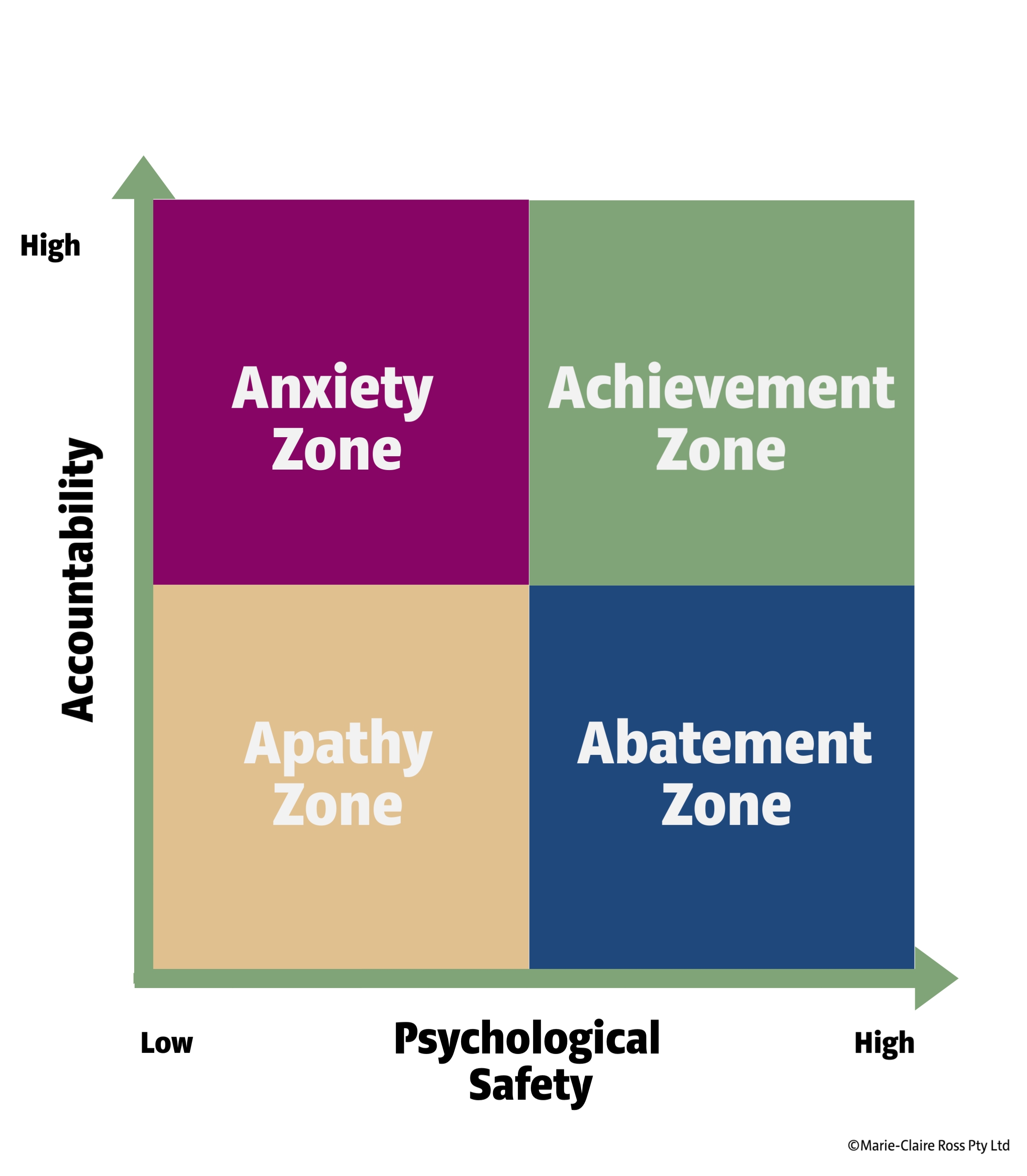
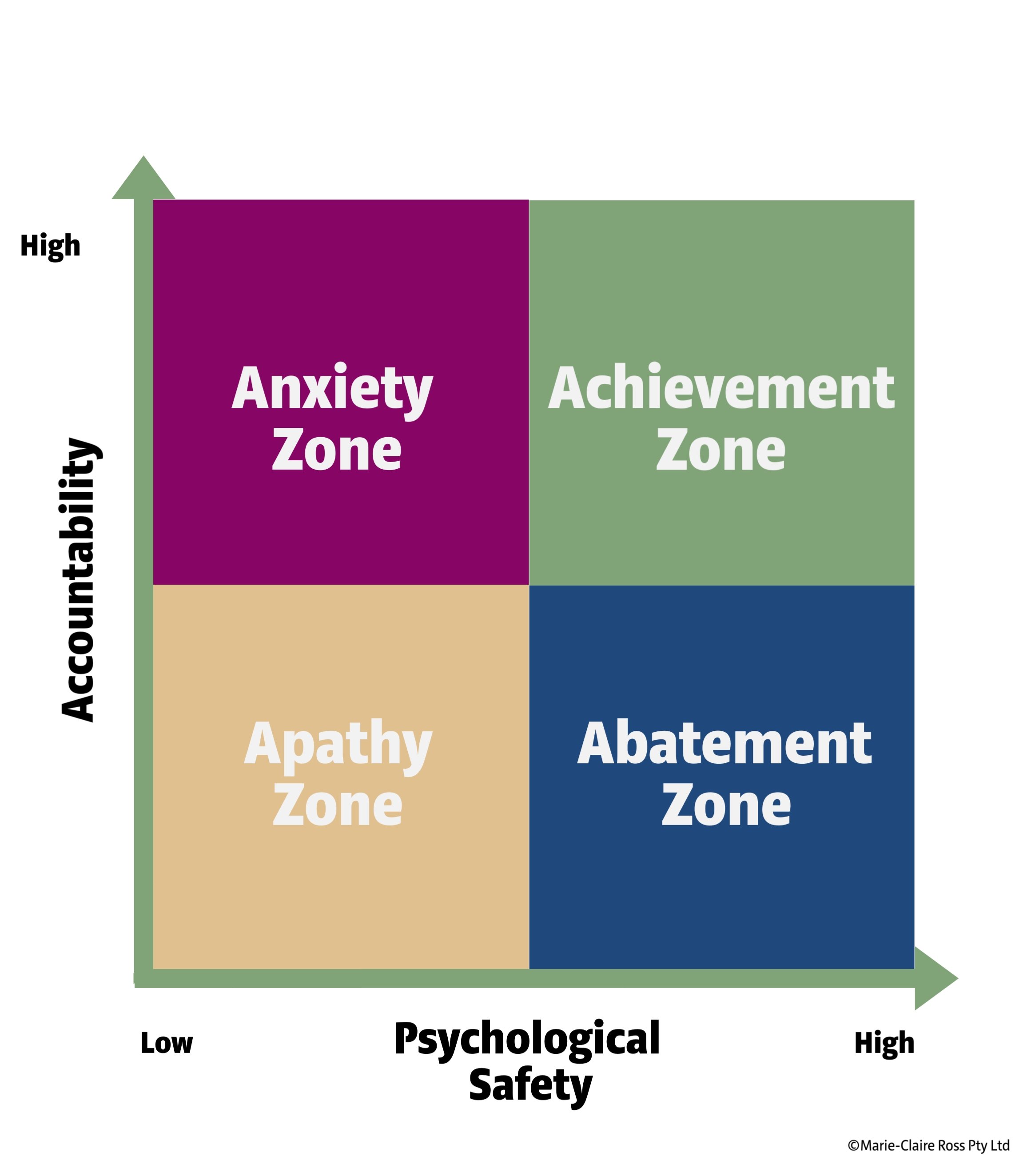
In my Leadership Mastermind program, I teach leaders about how to get their team to stay in the Achievement Zone. It is a game-changer to understand how high psychological safety and accountability interact to create high performance. You can find out more in my book, Trusted to Thrive (get a free chapter here). So let's unpack how to build a high performing team using the Achievement Zone model.
Research has found that leaders who promote positive energy have a significant impact on innovation, organisational performance and employee satisfaction. This requires leaders who prioritise being positive and exuding a positive, upbeat energy in order to maintain enthusiasm in their team, even when things get difficult.
This entails holding a steadfast belief that challenges will be overcome, no matter the circumstances. It's about trusting that as a team, you will navigate obstacles and pave a way forward. Embracing the reality that setbacks will occur, yet refusing to let negative occurrences deter your progress.
It requires what I call inspired optimism.
Inspired optimism is when we view all conditions as beneficial. Changing conditions, obstacles and moving targets are seen as opportunities to learn, adapt and grow.
Inspired optimism requires being willing to address both failure and success, rather than the typical leadership approach of favouring one over the other. Consequently, it generates high levels of psychological safety, because errors and concerns are openly discussed, ensuring the team can course correct and avert a potential crisis.
It's a common misperception that to be an authentic leader you have to lead in a consistent manner.

Find out six tips leaders can take to build high performing teams.
Discover how personal responsibility enhances leadership with three key strategies: self-leadership, self-trust, and emotional regulation.
-1.jpg)
Employees expect leaders to lead differently. Have you adapted to the new leadership qualities?