




1 min read
What Makes a Good Team Leader? 6 Team Leadership Skills That Build Trust
What makes a good team leader isn’t just about having authority or getting tasks done - it’s about the ability to create an environment where people...

Develop leaders, strengthen executive teams and gain deep insights with assessments designed to accelerate trust and performance.

Transform how your leaders think and perform with keynotes that spark connection, trust and high-performance cultures.

Explore practical tools, thought-leadership and resources to help you build trusted, high-performing teams.

Trustologie® is a leadership development consultancy founded by Marie-Claire Ross, specialising in helping executives and managers build high-trust, high-performing teams.

7 min read
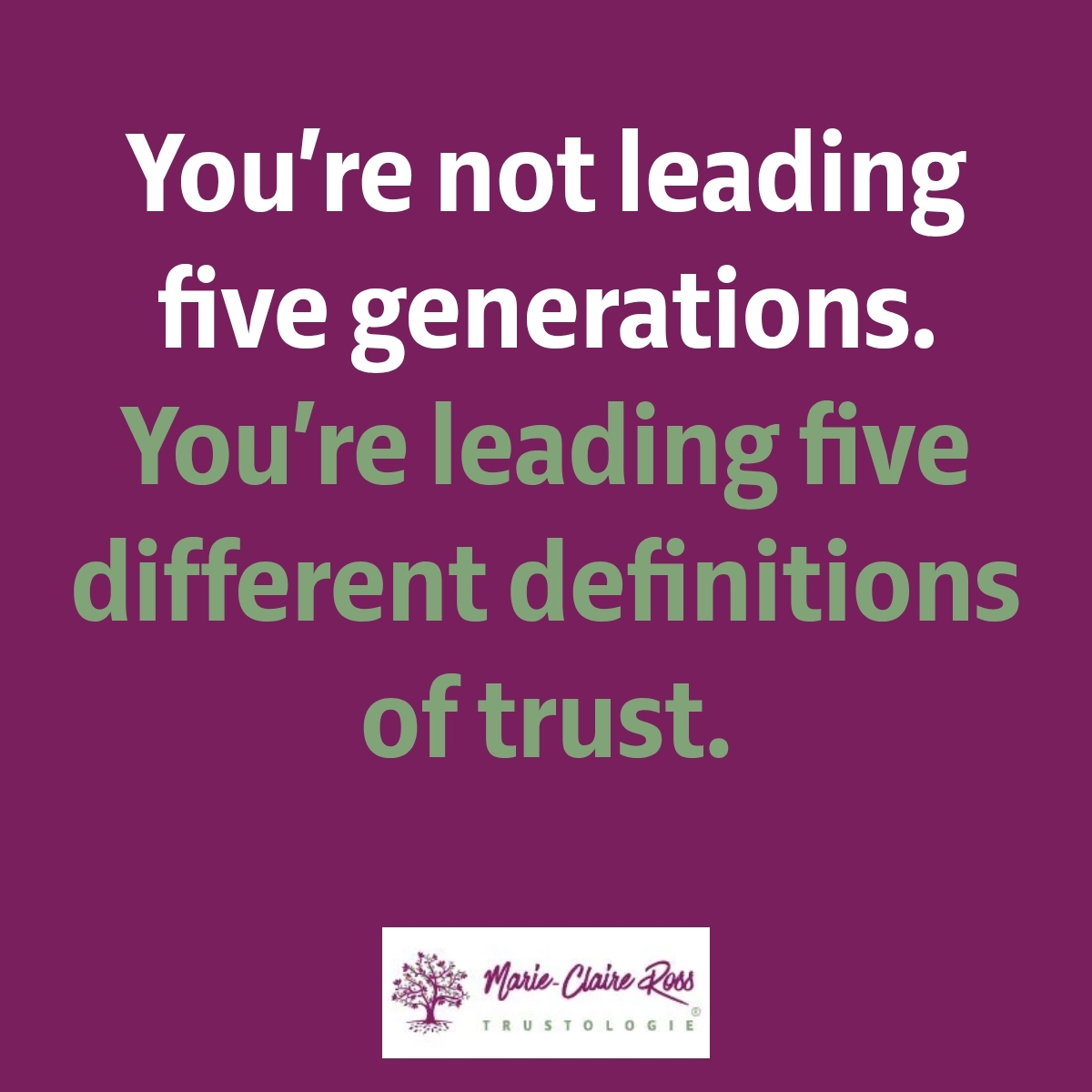
Five generations are now sitting around the same table (or the same Teams call ). Each generation learned to trust a leader in a completely different way. If you're leading a multigenerational team using one style of accountability, one way of giving feedback, one read on what "commitment" looks like, you are quietly losing trust with at least half the room.
Building trust with a multigenerational team means treating trust and accountability as things you calibrate person by person, not policies you apply uniformly. The three mistakes below - running one accountability system for everyone, falling into the rescue reflex, and reading generational differences as character flaws - all come from the same root cause: leading people the way you want to be led, instead of the way they actually need to be led.
Australian workplaces now regularly hold five generations at once, according to research from the Department of Employment and Workplace Relations (DEWR) on multi-generational workplaces.
That's not a communication problem. It's a trust-signals problem.
Each generation tends to read trust differently.
Boomers and the Silent Generation associate trust with loyalty, reliability and follow-through.
Gen X trusts leaders who demonstrate competence and then get out of the way.
Millennials read trust through transparency and whether their work connects to something that matters.
Gen Z looks for psychological safety and leaders who are honest about their own mistakes.
Interestingly, research consistently finds one thing every generation agrees on: authenticity. When a leader's words, decisions and actions actually line up - is a top trust driver across all five cohorts, even though each generation emphasises a different piece of it.
This is also why leading well here isn't about picking a leadership style and staying loyal to it. If you're still leading the way your first manager led you, it's worth building a leadership style that's actually your own, rather than mimicking your old boss. A fixed, borrowed style will only ever land as trustworthy with the generation it was borrowed from.
The truth is you cannot lead a multigenerational team with a single trust strategy, because there isn't a single definition of trust operating in the room.
Most leaders default to the accountability style they'd want applied to themselves. If you came up through structured annual reviews, that's what you run. If you're used to fast, informal feedback, that's what you offer everyone.
The problem is that accountability styles that build trust with one generation quietly undermine it with another. Boomers and the Silent Generation tend to trust structured, scheduled reviews with clear KPIs — it feels serious and respectful of their contribution. Gen X wants outcome-based goals and data, then room to work it out themselves. Millennials engage best with frequent, coaching-style check-ins tied to a bigger purpose. Gen Z expects real-time, transparent feedback loops, and wants to see leaders held accountable too, not just the team.
Consistency is not the same as sameness. Applying one accountability method to five different generations is not fairness. It is convenience dressed up as fairness.
The fix: Keep the standard identical - clear expectations, fair application, the resources people need to deliver. Flex the method. In your next round of one-on-ones, ask each person directly how often they want feedback and in what format. Build that into your operating cadence rather than assuming everyone wants what you'd want.
In my coaching practice, I see this constantly, across every industry and every generation: a leader notices someone starting to struggle, and steps in to smooth it over before that person has had the chance to work through it themselves. It rarely feels like taking over. It feels like being a good leader.
Here's the mechanism: a team under-functions in direct proportion to how much its manager over-functions. When people know you'll catch it, they stop reaching as hard. This isn't generational - it happens with a 24-year-old and a 58-year-old alike. But where it lands hardest is different by generation.
A team under-functions in direct proportion to how much its manager over-functions.
For your newer or younger team members, it costs them the one thing they need most right now: a track record. They haven't yet built the evidence (to themselves, or to you) that they can carry something all the way through. Every time you finish it for them, that evidence-building resets to zero.
For your more tenured Gen X and Boomer team members, it costs something different. This is a generation that reads a leader's trust through recognition of their competence. Being quietly corrected or finished for tells them their judgement is still on probation - one of the fastest ways I've seen trust erode with experienced people specifically.
I know this pull personally, and not from my executive coaching practice - dealing with my own family. Handing something back to your Gen Z kids and actually leaving it with them, even when they're struggling, is one of the hardest things I've had to practise. Particularly, when they are ranting and raving that you're being an uncaring mum. Of course, getting the same treatment from your Gen X husband is pretty rough as well. You can spend years stepping in - and we don't necessarily discriminate by age (more likely, who complains and struggles the most). It can show up with a new graduate or a twenty-year veteran.
The fix: One of the things I say in my book, Trusted to Thrive, is that you can't talk your way into trust; you have to behave into it. Handing work back, and resisting the urge to quietly tidy it up afterwards, is that behaviour in action. Before you pick up a piece of someone else's work this week, ask yourself one question: is this actually mine to finish, or am I about to take away the one thing that would prove (to them and to you) that they can be trusted with it? If it's the latter, say so plainly, agree on a date it needs to be completed by, and let it be theirs until then.
Let it be theirs. Mistakes included.
This is where a lot of multigenerational friction actually starts. A Gen Z employee who leaves at 5pm sharp isn't disengaged. They're setting a boundary, which their generation reads as self-respect. A Boomer manager who keeps things professional and doesn't share personal details isn't cold. They're applying the discretion their generation was trained to see as trustworthy. Left unexamined, these differences get quietly reinterpreted as character flaws instead of what they actually are: different trust signals being read through the wrong lens.
Research on age-diverse teams backs this up. Differing work values reduce trust across generations not because one group is less trustworthy, but because people send and read trust signals differently, and nobody's translating.
The fix: Stop guessing based on birth year. Name the trust driver explicitly and ask, rather than assume. A simple, direct question does more work than months of generic "improve communication" initiatives: "What does it look like when you feel like leadership has your back?" Different generations will give you genuinely different answers and that's the point.
In your next one-on-one with each person on your team, ask two questions and actually write down the answers:
Don't sort the answers by age before you've heard them — some of your biggest surprises will come from assumptions you didn't know you were making. Use the pattern that emerges to adjust your method, not your standard.
A multigenerational team was never going to trust you the way a single-generation team would have. The leaders who get this right aren't the ones who've memorised generational stereotypes — they're the ones willing to ask instead of assume, and to flex their method without softening their standard. That takes more attention than running one system for everyone. It's also the only version of leadership that actually earns trust across a team this different from itself.
Join me for a free webinar, How to Build Trust when Leading Multi-Generational Teams. We will go through how to lead without lowering your standards or relying on a one-size-fits-all leadership approach. Register free for the webinar.


1 min read
What makes a good team leader isn’t just about having authority or getting tasks done - it’s about the ability to create an environment where people...
1 min read
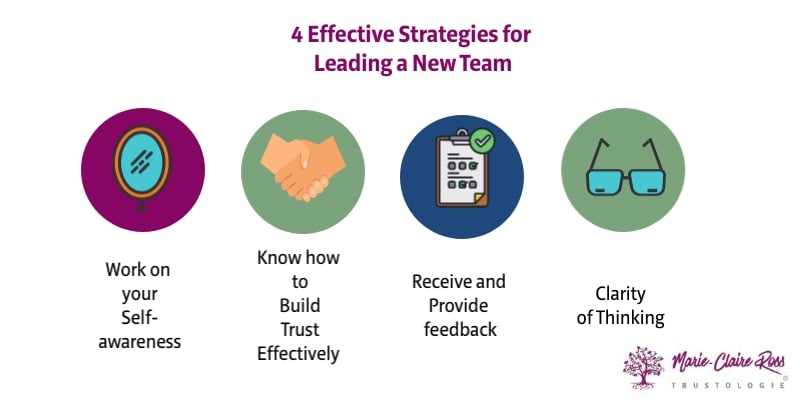
So you've just been elevated to the position of leading a brand new team - congratulations! No matter if this is your first time or you're a seasoned...

1 min read
In today’s fast-paced business world, the more trust you have across your organisation, the faster you can operate.