





Why Leaders of Leaders Need to Actually Hold Their Teams Accountable
Leaders of leaders are often held accountable for the wrong things. Here's how to change that with a three-expression accountability model.

Develop leaders, strengthen executive teams and gain deep insights with assessments designed to accelerate trust and performance.

Transform how your leaders think and perform with keynotes that spark connection, trust and high-performance cultures.
Explore practical tools, thought-leadership and resources to help you build trusted, high-performing teams.
Trustologie® is a leadership development consultancy founded by Marie-Claire Ross, specialising in helping executives and managers build high-trust, high-performing teams.

8 min read
How do you stay positive when the bad news is real?
Last week, I sat with a room of CEOs and managing directors facing rising costs, squeezed margins and uncertainty. They had plenty of reasons to be pessimistic. Yet, as the conversation turned to the future, they were already looking for opportunities.
They could see how difficult things were. They also believed they could do something about it.
That is where leadership and positivity come together and where telling your team to “stay positive” falls short.
When projects stall, targets slip and another roadblock appears, people need more than reassurance. They need a reason to believe their effort still matters. Gloss over their concerns and your upbeat message can become another reason to stop speaking up.
I call the alternative inspired optimism: facing what is hard while holding a steady belief that, together, you can find a way through.
It means naming the challenge, showing people what they can influence, and making the future visible enough that they can see their part in it.
Your team doesn’t need you to promise that everything will be fine. They need you to help them see a way forward.
For the first hour, the room was sobering.
One manufacturer's petroleum-based raw materials had jumped overnight, with customers locked into contracts months in advance. Fuel levies had moved from 11% to 55%, and carriers were now reviewing them weekly. One leader said their bank was preparing its balance sheet for a 2027 recession. Another observed that when an election is called, business drops by around 5% "because everyone's just freaking out."
You could have forgiven the room for sinking.
It didn't. When I asked what would separate the companies that come out of the next five years stronger, the answers changed. One CEO said this is a survival-of-the-fittest cycle, and that for the businesses who get their house in order, "now's the time that they are going to sow the seeds of the next decade."
These leaders were not choosing between realism and hope. They were holding both: clear about the challenges ahead, yet confident they would find a way through. They didn't know how events would unfold. That uncertainty hadn't shaken their belief.
Instead, they were 100% certain that they, and their company, would survive the perfect storm of difficult market conditions, geopolitical risk , red tape and increased taxes.
Jim Collins called this the Stockdale Paradox: confront the most brutal facts of your current reality, and never lose faith that you will prevail in the end. In my own work, I call it inspired optimism.
Inspired optimism gives your team room to talk about what is working and what isn’t. It's the unvarnished perspective.
You celebrate progress, address missed targets and work through setbacks openly. Both success and failure become opportunities to learn - a balance I explored in the secret superpower of successful leaders.
Forced positivity can look similar on the surface. Upbeat updates. Celebrating wins. A vision that sounds exciting. But missed targets get glossed over and nobody names what is not working.
That is avoidance dressed up as leadership.
The difference becomes clear in how your team responds when things get difficult. Do people raise problems and look for solutions? Or do they hide bad news, lose confidence or push harder out of fear?
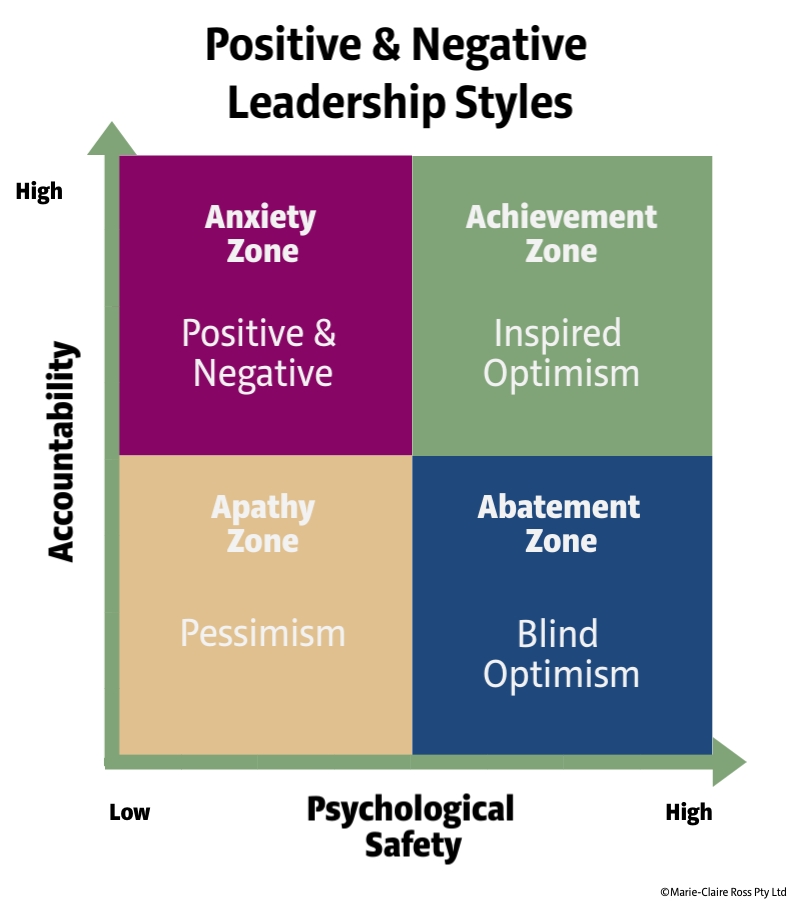
A leader’s outlook helps shape those response and which zone their team operates in. I unpack this further in how positive and negative leadership styles affect team performance, but here is the short version.
|
Leader's outlook |
What the team experiences |
Zone |
|---|---|---|
|
Pessimism |
Grievances, cynicism, low energy, people hiding how they really feel |
Apathy |
|
Blind optimism |
Problems go unspoken, targets quietly slip, a false sense of safety |
Abatement |
|
Positive and negative (Swinging between hope and worry) |
Fear-driven urgency, overwork, people feeling alone in the pressure |
Anxiety |
|
Inspired optimism |
Hard truths and wins both on the table, solutions over blame, 100% certainty you will survive |
Achievement |
The Achievement Zone, from my book Trusted to Thrive, is where teams have both high psychological safety and high accountability. Inspired optimism is what keeps them there when conditions turn.
Learned helplessness is what happens when people conclude that their effort no longer makes a difference to the outcome. Martin Seligman and Steven Maier's decades of research on the topic found that the expectation of control, not the setback itself, is what determines whether people keep trying.
People feel disempowered, oftentimes not realising they have the power of choice.
That matters for leaders. Setbacks don't create helplessness on their own. A team that cannot see how its work connects to anything better does.
In a team, it rarely announces itself. You will see:
This is the Apathy Zone. It is the hardest place to lead a team out of, and the place many teams drift towards when every update is about cost, risk and what might go wrong next.
Start with what you know for sure.
Uncertainty is harder on people than bad news. In a study at University College London, people were more stressed when there was a 50% chance of receiving an electric shock than when they knew one was definitely coming. Not knowing kept them on high alert.
Your team is living with the 50% version every day. Will the contract renew? Will there be cuts? Is my role safe? You can't remove the uncertainty. But you can give people solid ground to stand on while it plays out.
A leader in one of my programs put it perfectly when talking about the restructure her team was going through: "People adapt to change. It's just people don't adapt to unknowns."
If you do one thing differently this quarter, make the future visible to your team.
People can handle a great deal of difficulty when they can see where it is leading. A leader in one of my programs put it perfectly when talking about the restructure her team was going through: "People adapt to change. It's just people don't adapt to unknowns."
In Trusted to Thrive, the third practice of the Integrated Trust Building System is Stepping into a Meaningful Future. It answers the question every team member is quietly asking: what is my future here? Here is how to put it to work.
Start with what is hard. Say it plainly, in the team meeting. Ideally, before anyone has to mention it.
"Margins are tighter than they've been in years. Two of our biggest customers have pushed back on price. I don't know yet how the next six months will play out."
This is what forced positivity skips. When you name it first, people stop spending energy wondering whether you can see what they see. You're being real and that brings comfort even when the conversation is uncomfortable.
You can't be certain how the next year will play out. You can be certain of what you will do. In the cast of the Stockdale Paradox, you can be certain that you will survive.
That is what the leaders at my roundtable had. They didn't know how events would unfold. They were certain of their own commitment to come through it.
Uncertainty makes people wait. Teams stall, decisions get parked, and everyone holds their breath to see what happens next. Certainty gets them moving again.
Ask your team to name three things they are certain of right now. They don't need to be about the problem in front of you:
Certainty doesn't need to cover everything. It needs to be true.
Then narrow the focus. Of everything that is hard, what can this team influence?
Not interest rates. Not the election. But response times to customers, the quality of quotes, how quickly a problem gets raised, the one process that wastes hours every week.
Learned helplessness thrives on a sense of having no control. Showing people where they do have control is how you interrupt it.
"Things will get better" is not a future. It is a hope.
A visible future is specific enough that people can picture their part in it:
"In twelve months, I want us to be the supplier our customers call first when things go wrong. This month, that means every customer issue gets an answer within a day."
Then show progress against it.
One conversation won't do it. Build it into how your team works. At the start of a weekly team meeting, ask three questions:
The third question is the one most leaders skip, and the one that matters most. Progress that nobody names is progress nobody feels.
As I say in Trusted to Thrive: "You can't talk your way into trust. You have to behave your way into it." Optimism works the same way. Your team will believe in the future when they see you return to it, week after week, especially when the news is bad.
Before your next team meeting, write down four sentences:
Say them out loud. Then ask your team what they would add.
In Australia, magnolias flower in July, in the depths of winter, before the conditions are right. They don't wait for spring to arrive. The flowering is the signal that it is coming.
The leaders in that room were doing the same thing. Clear about the cold. Already growing.
That is what leadership and positivity look like together. Your team doesn't need you to pretend it is spring. They need you to show them it is coming, and what they can plant now.
If your executive team has an offsite coming up, my How to Lead with Inspired Optimism workshop is designed for exactly this moment. Your leaders will see which zone the team is operating in, practise naming what is hard and anchoring on what they are certain of, and leave with a shared way to make the future visible for the people they lead. It recently earned 95% client satisfaction with Vistage CEO and executive groups. Talk to me about your next executive offsite.
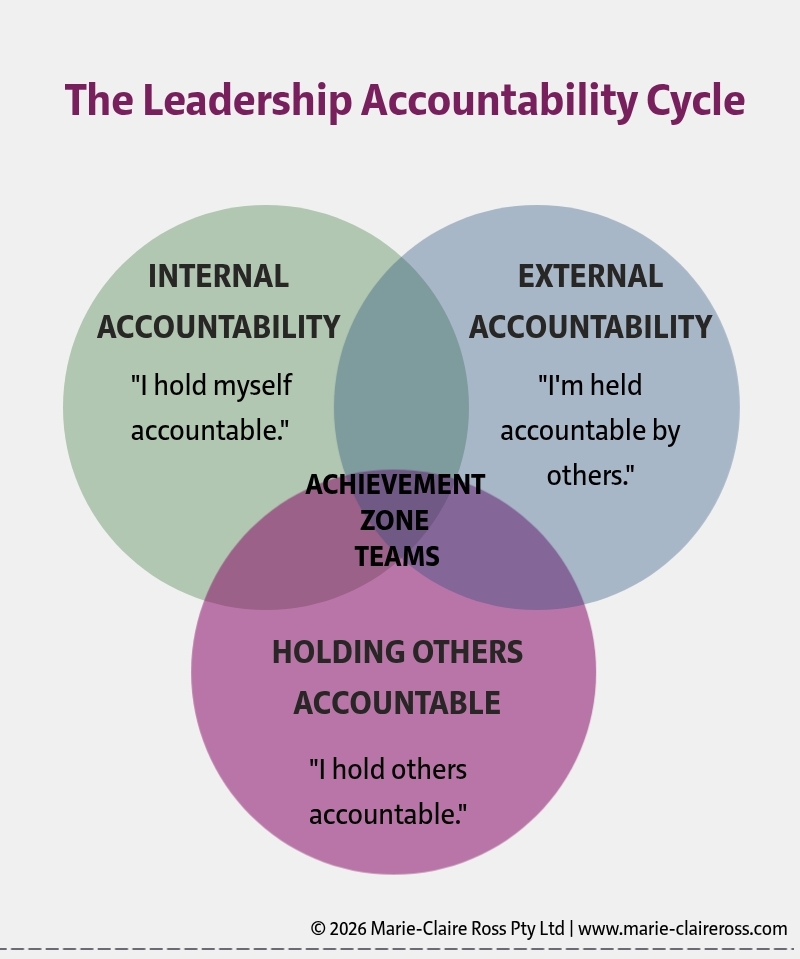
Leaders of leaders are often held accountable for the wrong things. Here's how to change that with a three-expression accountability model.
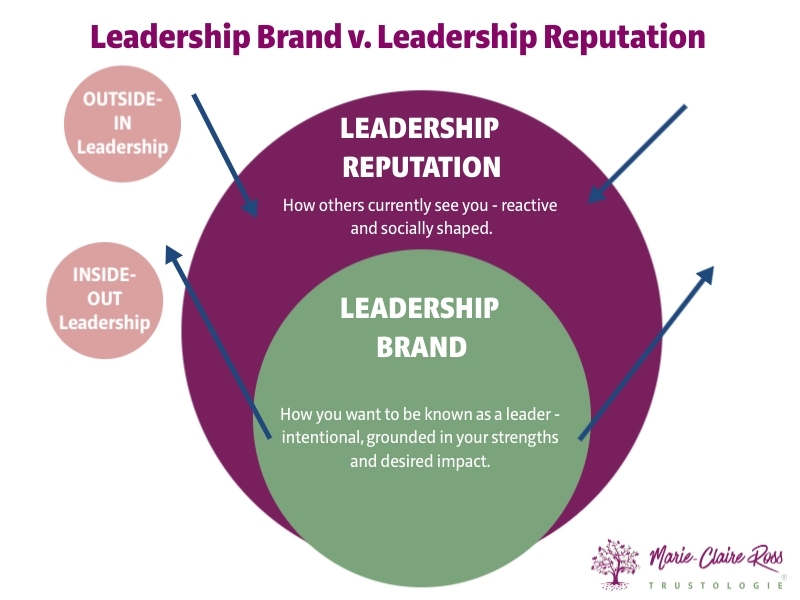
Discover how defining your leadership brand can drive career success and organisational impact. Learn to lead with intention, authenticity, and...

Discover the key elements of a successful leadership development program to enhance team performance in today’s dynamic workplace.